Free Is Enough. Here's What You Give Up.
Public speaking courses in India run roughly ₹2,000 to ₹15,000. Here is the thing worth knowing before you spend anything: nearly all of the useful information is free, and the part that actually changes your ability is not information at all — it is repetition, which cannot be bought.
Split public speaking into three parts and the argument gets easy:
- Knowledge — what a good talk looks like, how to structure one, what filler words are. Free everywhere. Permanently.
- Practice — the hundreds of repetitions that retrain your nervous system. Free, but it costs you time and discomfort. Nobody can do it for you.
- Feedback — someone telling you what your recordings reveal that you cannot feel. Free if you have one honest friend. This is the part people pay for.
Money buys you environment and accountability, not secrets. For a student in India with no budget, that is a solvable problem rather than a barrier.
12 Free Public Speaking Options That Are Actually Free
Grouped by what you need them for. Use layer one for understanding, layer two for the habit, layer three for accountability.
Layer 1 — Learn the theory (free forever)
TED Talks — watch for craft, not content
FreeThe most underrated free resource. Watch any talk you enjoy, then rewatch the first 60 seconds and notice the hook, the pace and the pauses. Rewatch a weak talk too and work out why you drifted.
Best for: understanding that great speaking has a shape you can copy.
Free YouTube channels on public speaking
FreeThere are dozens of channels teaching structure, storytelling, voice and body language. Search the topic rather than a channel name, and pick creators who show real talks and critique them rather than only giving tips.
Best for: specific mechanics — how to open strongly, how to use pauses, how to answer questions.
Library and OpenCourseWare material
FreeUniversities and platforms like OpenCourseWare publish full communication and rhetoric courses free. Useful if you want the theory properly sequenced rather than in scattered videos.
Best for: students who like reading and want a structured syllabus.
Free English-speaking practice channels
FreeIf the barrier is fluency rather than nerves, these help more than public speaking videos. Fixing the language removes a big chunk of the hesitation that beginners mistake for stage fear.
Best for: students who freeze because they are searching for words, not because of the audience.
Layer 2 — Build the habit (free, and the part that matters)
Your phone camera
FreeThe single most effective free tool, and it is already in your pocket. Record a sixty-second talk daily. Watch it once. Count your filler words. The gap between what you think you sound like and what you actually sound like is where your progress lives.
Best for: everyone. Do this before you pay for anything.
Voice recorder apps
FreeFree apps that record and play back audio are enough to practise pace, pauses and filler words without a camera. Use these in week one if the camera feels impossible, then switch to video by week two.
Best for: introverts starting from absolute zero.
A free practice partner
FreeA friend, a sibling, a parent, or a study group. Give them a topic and 90 seconds to prepare, then listen. Ask one question: "What do you remember?" That single question is a better clarity test than any rubric.
Best for: turning solo practice into something with a real listener.
Free AI practice tools
Free tierAI chatbots can act as an audience: paste your script and ask for feedback on structure, clarity and filler words. They cannot judge delivery or warmth, so never rely on them alone — but for "is my argument clear" they are free and instant.
Best for: tightening a script before you record it.
Layer 3 — Structure and accountability
TaskVeda — Zero to Confidence (free, 21 days)
Free · CertificateA 21-day structured online bootcamp for students who have never spoken in public. Daily speaking challenges that escalate in difficulty, camera-on practice, storytelling drills, voice and body language work, mock interview rounds, live stage practice, mentor feedback and a free completion certificate for LinkedIn. Runs fully online, limited to 50 seats per batch so feedback stays personal.
Best for: students who know what to do but keep not doing it. This is the layer free videos cannot supply.
Your college's own clubs and events
FreeDebate clubs, toastmasters-style societies, student councils and TEDx-style events are free and produce real audiences on a schedule. Regular obligation beats optional practice every time.
Best for: forcing yourself into a real audience with real consequences.
Free speaker meetups and workshops
FreeToastmasters-style groups and public speaking meetups run free in most Indian cities, usually weekly, and include practice slots where you speak to the group and get structured feedback.
Best for: feedback from people who are also practising.
Replaying your own recordings
FreeKeep one folder on your phone of every practice recording, in order. Month three, listen to month one. This is the most persuasive argument you can give yourself, and it costs nothing.
Best for: proving to yourself that the practice is working.
How to use this list
Do not try all twelve. Pick one from layer one, commit to layer two today, and choose one layer-three option. Speaking improves through consistent repetition of a small routine, not through consuming resources — the most common mistake is spending three months watching great speakers and never opening your own mouth.
How to Spot a Fake "Free" Course
Searching for free training online puts you in contact with a lot of deliberate bait. These are not subtle once you know them, and every one of them ends with a sales call or a payment screen.
The five warning signs
- The free trial that is really a funnel. "Free" for two days, then a mandatory upgrade to continue the same modules. If the content you want is behind the paywall, it was never free.
- The certificate that costs money. A "free course certificate" for a small processing, verification or shipping fee. A legitimate free certificate is free — if someone wants money for it, treat the whole offer with suspicion.
- The mentorship call that appears from nowhere. You finish a free module and suddenly a "career counsellor" calls to explain the paid cohort. This is the single most common bait pattern in Indian edtech.
- Guaranteed-outcome claims. "Become a confident speaker in 7 days." "Guaranteed placement." Real training never promises this, because fear does not work that way.
- Pressure and scarcity. "Only 3 seats left", "offer ends tonight", a countdown timer that resets when you reload. Genuine training does not need to rush you.
- Heavy collection of personal data for a free class. A free two-hour session should never need your bank details, PAN card or Aadhaar.
The three-question test before you enrol in anything
- Is there a payment link anywhere in the entire flow? Including the certificate step, which people often skip.
- Does anyone guarantee an outcome? Real training describes what you will practise, not what you will become.
- Is the daily work actually specified? Vague programmes ("transform your confidence") produce nothing. A real programme tells you exactly what to do on day seven.
If a programme passes all three, it is probably genuine and genuinely free. TaskVeda's own Zero to Confidence bootcamp publishes the full day-by-day structure openly, including what happens on each of the 21 days, and the certificate carries no fee — precisely because we know how many students have been burned by offers that were not really free.
Free vs Paid: What ₹10,000 Actually Buys You
Being honest about this is more useful than pretending paid courses are a scam. Here is the real split.
| What you need | Can you get it free? | Where paid genuinely wins |
|---|---|---|
| Theory and technique | Yes, completely | Better pacing and editing |
| A daily habit | Yes | Accountability and reminders |
| Feedback on your recordings | Yes, from an honest friend | A trained coach who spots things blind |
| Overcoming real fear | Yes — exposure is free | A room of strangers who need you to show up |
| A credential employers recognise | Partly | Brand name on the certificate |
| Networking with speakers | Difficult | Access to mentors and cohorts |
Read that honestly: money buys accountability, coaching and credentials. It does not buy the repetitions, and the repetitions are the thing that changes how you speak. If you cannot afford a course, the correct response is to build a daily habit and find free feedback — not to conclude that speaking is closed to you.
A Free Daily Routine That Actually Works
Here is a complete zero-cost routine. Thirty-five minutes a day, phone only, no course required.
Watch or read one good talk
- Watch a TED talk or one lesson on a specific mechanic — openers, pauses, answering questions.
- Write down three things you noticed about the delivery, not the subject matter.
Speak out loud on camera
- Sixty to ninety seconds on any topic. Same topic each week so you can compare.
- Count your filler words. Aim to beat yesterday's count.
- Save the recording. Do not delete the bad ones — the bad ones are the baseline.
Watch once and fix one thing
- Fix exactly one issue per recording. Not five. One habit per week.
- Common first fixes: speak slower, pause before the main point, stop fidgeting, look at the lens.
Log it
- Track fillers, words per minute and longest pause. Four numbers, one line a day.
- After thirty days you will have proof of progress that no amount of motivation could give you.
Add a human once a week
The routine above works alone, but the moment you add a real listener it accelerates. Once a week, give the same talk to a friend or a study group and ask what they remember. That single question is the closest thing to free coaching that exists.
Free Training Worth Taking Alongside This
If you are building job-ready skills on a zero budget, public speaking is only one piece. These are the others worth your time.
- Spoken English and communication — the foundation under everything. Start with communication skills for students.
- Structured interview preparation — interview preparation for freshers, including HR questions and technical rounds.
- Written communication — most placements include an email or written test. Practise writing short, clear professional emails.
- Presentation software — learn one properly. It removes so much anxiety from presenting that it is worth a weekend.
- Reading out loud — sounds trivial, but ten minutes of reading aloud daily is the fastest fix for monotone delivery.
TaskVeda runs several free programs alongside Zero to Confidence, including a free communication skills bootcamp and free AI tools training, all built for Indian students with no budget. You can see the full list on our blog.
3,500+ Students Have Done This Free
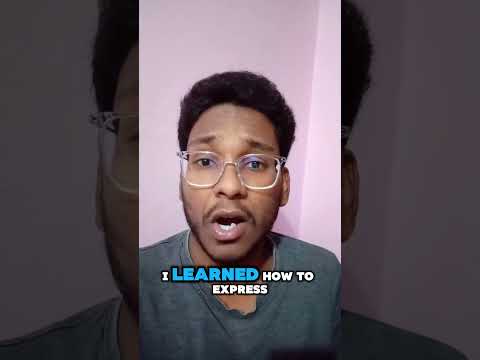
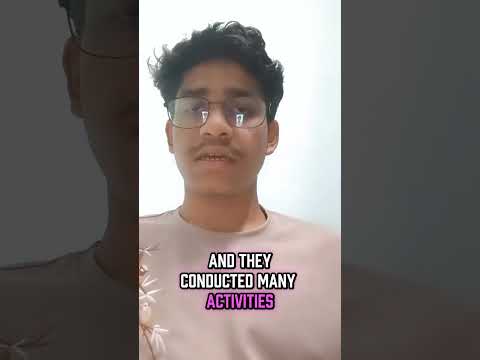
“I was terrified of speaking. In just a few weeks, I learned how to speak better, why great speakers succeed, and how storytelling works. Confidence isn’t overnight — it’s small actions, daily.” Mohammed Imran SharifZero to Confidence Bootcamp Participant
Prefer someone to hold you to it?
The plan above works alone. If you know you’ll quit in week two without accountability, Zero to Confidence is the free 21-day version — daily challenges, mentor feedback on your recordings, and a certificate at the end.
Apply Free — 21 Days Join on WhatsApp 50 seats per batch · no payment screen, ever